


Why Your Vote Matters on November 3rd
A single vote can feel small, especially in a country with millions of voters. But elections are not abstract contests happening somewhere far away. They decide who writes local budgets, who sets school priorities, who appoints judges, who shapes public safety, who manages roads and transit, and who speaks for the country in moments of crisis.
That is why voting on November 3rd matters. The ballot is one of the few places where every eligible voter gets the same amount of power. One person. One vote. No louder voice because of wealth, title, zip code, or online following.
Voting is not the only way to participate in civic life, but it is one of the most direct. It turns opinions into a counted choice. It gives communities a way to settle disagreements without violence. It reminds public officials that power is borrowed, not owned.
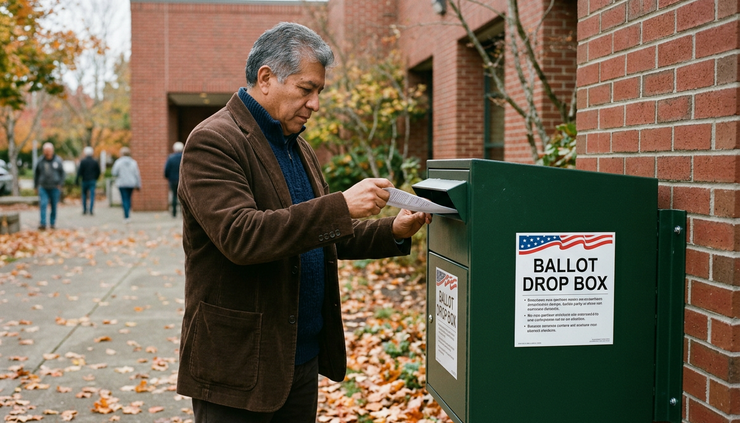
Elections are often closer than they look
National elections get the most attention, but many races are decided by much smaller margins, especially local races. City council seats, school board positions, county offices, judicial races, and ballot measures can come down to a narrow difference.
Even when the top of the ticket is not close, other parts of the ballot may be. A few hundred votes can shape who manages a local budget. A few dozen votes can decide whether a bond measure passes. In some cases, a handful of ballots can change the outcome.
That means the idea that “my vote will not matter” misses how elections actually work.
Most ballots contain layers of power:
President, governor, or senator
State legislative seats
Mayors and city councils
County commissioners and sheriffs
Judges
School boards
Ballot initiatives
Tax, bond, or charter measures
The races that seem less dramatic can have the most direct effect on daily life. A school board decision may affect classroom resources. A county official may help shape public health services. A local judge may influence how laws play out in real cases.
Skipping those races leaves the decision to a smaller group of voters.
Voting protects the issues that affect daily life
Politics can sound distant when it becomes a fight between slogans. Yet most public decisions touch ordinary routines.
Election results can influence:
How schools are funded
How housing rules are written
How roads, bridges, and transit are maintained
How police and fire departments are managed
How voting access is protected or limited
How public health systems prepare for emergencies
How taxes are collected and spent
How courts interpret laws
How environmental rules are enforced
These are not abstract debates. They affect rent, commutes, emergency response times, clean water, classroom sizes, small businesses, parks, libraries, and the cost of basic services.
A vote is not a magic wand. It does not fix a community overnight. But it helps choose the people who will make those decisions for the next term. It also signals what voters are paying attention to. Elected officials notice which issues bring people to the polls.
When more people vote, leaders must answer to a broader public. When fewer people vote, organized and consistent voting groups carry more weight. That is not wrong, but it means silence has consequences.
The ballot gives equal weight to unequal voices
Outside the voting booth, influence is rarely equal. Some people have wealth. Some have connections. Some have large platforms. Some can afford lobbyists or campaign donations. Many cannot.
The ballot does something rare. It gives every eligible voter the same formal say.
That equality is powerful because it does not depend on status. A first-time voter and a retired judge each cast one ballot. A renter and a landlord each cast one ballot. A college student and a business owner each cast one ballot. The vote itself carries the same weight.
That is why access to voting has always mattered so much in American history. Many groups had to fight for the right to vote, including Black Americans, women, Native Americans, Asian Americans, younger adults, and people facing language or disability barriers. The history is not tidy, and the work has not ended. But the right to vote remains one of the clearest signs of full civic membership.
Using that right honors more than a personal opinion. It honors the long fight to make democracy more real.
Not voting is still a choice
Some people do not vote because they dislike the candidates. Others feel tired of conflict. Some believe the system is broken. Those feelings are real, and many people across the political spectrum share them.
But not voting does not remove anyone from politics. It only removes their vote from the count.
Public decisions still get made. Budgets still pass. Laws still change. Judges still take the bench. School policies still move forward. Offices still get filled.
When someone stays home, the result is not neutrality. It is a choice to let other voters decide.
That can be reasonable in rare cases, such as when a voter truly cannot make an informed choice in a specific race. But skipping the whole ballot out of frustration gives up influence without gaining anything in return.
A ballot often includes options beyond candidates. Ballot measures, local questions, and retention elections may let voters weigh in on specific issues. Even if one race feels disappointing, other parts of the ballot may still deserve attention.
Voting is a way to be counted, not a way to be perfect
Many people treat voting like a test. They worry they do not know enough. They worry they will choose wrong. They feel overwhelmed by long ballots, unfamiliar names, and legal language.
A good voter is not someone who knows everything. A good voter is someone who takes the process seriously enough to prepare.
That preparation can be simple:
Check registration status
Registration rules vary by state. Confirming status early avoids last-minute problems.
Find the correct polling place or ballot return option
Polling places can change. Mail ballot rules, drop boxes, and early voting sites also vary.
Review a sample ballot
A sample ballot turns Election Day from a guessing game into a plan.
Read from more than one source
Candidate websites, local news, voter guides, public records, and nonpartisan election offices can all help.
Decide on transportation and timing
Long lines, work schedules, child care, weather, and travel can get in the way. A plan lowers the chance of missing the vote.
Bring the right ID if required
Voter ID rules differ by state. Checking before Election Day prevents stress at the polls.
No one needs to become a policy scholar to cast a thoughtful ballot. A little preparation goes a long way.

Local elections may shape life faster than national ones
Presidential elections draw the largest turnout because the stakes feel obvious. The president affects foreign policy, federal agencies, court appointments, budgets, and national priorities. Those are major responsibilities.
Still, local offices often shape daily life more quickly.
A city council may decide whether to approve new housing. A county commission may fund mental health services. A school board may choose curriculum priorities or building repairs. A district attorney may set prosecution policies. A state legislature may draw district lines, set voting rules, and pass laws on education, health care, taxes, and public safety.
These decisions are close to home. They can change what residents experience within months, not years.
Local races also tend to have lower turnout. That makes each vote carry more practical weight. If fewer people vote in a race, each ballot becomes a larger share of the total.
This is why the bottom of the ballot deserves attention. The names may be less familiar, but the offices are not less important.
Voting strengthens democracy beyond one election
Democracy is not self-running. It depends on habits, norms, and public trust. Voting is one of the habits that keeps the system alive.
When people vote, they help create a record of public consent. Winners can govern with clearer legitimacy. Losers can organize for the next election. Voters can judge performance and respond. The whole system depends on the expectation that power can change hands through ballots.
High participation also sends a message to future candidates. It shows that people are watching. It encourages stronger candidates to run. It makes it harder for officials to ignore broad public concerns.
Voting does not require blind faith in government. In fact, voting is one way to express doubt, demand better leadership, or reject poor performance. A ballot can say yes, no, enough, keep going, or try something else.
Cynicism may feel smart, but it rarely builds power. Participation does.
Your vote speaks for more than one person
A vote is personal, but it is not only personal. Many people are affected by elections even if they cannot vote. Children, some immigrants, people with certain legal restrictions, and future residents all live with the results.
Voting can be a way to consider neighbors, family members, workers, patients, students, caregivers, and people who depend on public services. It can also reflect concern for future generations who will inherit today’s choices.
That does not mean everyone must vote the same way. People can share a community and disagree deeply about what is best for it. That is part of democracy. The point is that voting asks people to look beyond complaint and make a choice.
A healthy election is not one where everyone agrees. It is one where more people take part, accept the rules, and keep working after the votes are counted.
One day of voting can shape years of decisions
Election Day is brief. The term that follows is not.
A senator may serve six years. A president serves four. Many governors, mayors, judges, and local officials serve multi-year terms. Ballot measures can affect public policy for decades. Constitutional amendments can be even harder to change.
Missing one election can mean living with decisions made by others for a long time.
That does not mean every election is a crisis. Constant panic is exhausting and unhealthy. But elections do matter because they set direction. They decide who gets authority, which ideas get tested, and which problems receive attention.
Voting on November 3rd is a practical act. It is a way to help choose the path ahead instead of only reacting after choices have been made.
Make a plan and use your power
The stronger question is not whether one vote matters in every possible mathematical sense. The stronger question is this: what happens when millions of people decide their votes do not matter?
The answer is simple. Fewer people make decisions for everyone else.
Voting is not the whole job of citizenship, but it is a key part of it. Learn the races. Check the rules in your state. Talk with people you trust. Read the ballot fully. Then cast it.
A democracy works best when participation is wide, steady, and serious. On November 3rd, your vote is your voice in the count. Use it.


Comments