

Inclusive Mental Health Clothing for Every Community
Clothing can say “you belong” before anyone speaks a word. That matters in mental health spaces, where stigma, silence, and narrow ideas of wellness still leave many people unseen.
Inclusive mental health clothing is more than a hoodie with a kind phrase on it. It is clothing that respects different bodies, cultures, sensory needs, identities, budgets, climates, and lived experiences. Done well, it can help people feel less alone. It can also start gentle conversations without turning anyone’s pain into a slogan.
This topic deserves care. Mental health clothing should never pretend to replace therapy, medication, crisis support, community care, or medical treatment. It can, though, offer comfort, visibility, and a small daily reminder that healing does not belong to only one kind of person.

Inclusive Mental Health Clothing for Every Community| What makes mental health clothing truly inclusive
Many wellness products use the language of support, but not all of them serve people well. A shirt that says “good vibes only” may sound upbeat, yet it can dismiss grief, anxiety, depression, trauma, or burnout. A brand that carries only small sizes sends a quiet message about who belongs. A design that uses one cultural symbol without context can feel careless rather than supportive.
Inclusive mental health clothing begins with a simple idea: people experience mental health in different ways, and clothing should make room for that.
That means considering:
Size ranges that include petite, tall, plus-size, and extended sizes
Sensory needs, such as soft fabric, flat seams, tag-free necklines, and gentle waistbands
Gender expression, including cuts that are not limited to “men’s” and “women’s” sections
Cultural respect, especially when using language, colors, symbols, or traditional patterns
Disability access, including easy closures, seated fit, and adaptive options
Climate and daily life, from lightweight shirts to cozy layers
Price points that do not make belonging feel exclusive
A thoughtful piece of clothing does not have to do everything at once. But it should avoid making people feel like an afterthought.
Messages should support without simplifying pain
Words carry weight. On clothing, they travel into grocery stores, schools, clinics, gyms, buses, family dinners, and everyday walks. That visibility can be powerful, but it can also be harmful if the message is shallow.
The best mental health messages give people room to be honest. They do not demand constant positivity. They do not frame recovery as a personal branding project. They do not shame people for needing help.
Supportive phrases often sound grounded and human:
“One breath at a time”
“Rest is part of healing”
“You are not a burden”
“Healing has no deadline”
“Soft days count”
“Ask me about mental health”
“Community care saves lives”
Notice the tone. These phrases offer care without making promises. They create connection without forcing disclosure. They can comfort the person wearing the item and gently signal safety to others.
By contrast, some common phrases can miss the mark. “Choose happiness” may feel painful to someone living with clinical depression. “No excuses” can sound harsh to someone managing trauma, chronic illness, or fatigue. Even “self-care fixes everything” can place too much pressure on an individual when they need support from people, systems, and professionals.
Good mental health clothing leaves space for complexity. It allows people to be hopeful and tired at the same time.
Design for many bodies, not an imaginary average
A truly inclusive clothing line does not treat the “average body” as the default and everyone else as a special request. Bodies change. People live with disabilities. Some people bind their chest. Some need room for medical devices. Some sit most of the day. Some need clothing that works through weight changes, pregnancy, bloating, recovery, or hormonal shifts.
Fit is part of emotional comfort. Clothing that pinches, rolls, scratches, gaps, or restricts can add stress to an already hard day.
Design choices that make mental health apparel more welcoming include:
Relaxed fits that still look intentional
Multiple length options for shirts and pants
Wide, soft waistbands that do not dig in
Armholes and sleeves that allow movement
Necklines that do not irritate or feel restrictive
Adaptive openings with magnets, snaps, or easy-grip pulls when safe and practical
Hoodies that work for different head sizes, hairstyles, Hijabs, turbans, scarves, and protective styles
Pants shaped for both standing and seated wear
Inclusive fit also means showing clothing on different bodies. A customer should not have to guess whether a hoodie will work for a fuller chest, a wheelchair user, broad shoulders, a soft belly, or a short torso.

Sensory comfort is not a small detail
For many people, comfort is not only about preference. Sensory sensitivity can affect autistic people, people with ADHD, people with anxiety, trauma survivors, migraine sufferers, and others. A scratchy tag or tight cuff can become impossible to ignore. A noisy fabric can feel overwhelming. A print with a stiff plastic feel can make a shirt sit unworn in a drawer.
Sensory-friendly clothing supports regulation. It can help someone move through the day with less friction. That does not make it medical treatment, but it can reduce one common source of discomfort.
Useful sensory-friendly features include:
Soft natural or blended fabrics
Breathable materials for temperature changes
Minimal seams in high-friction areas
Printed labels instead of tags
Smooth interior finishes
Flexible waistbands and cuffs
Low-odor dyes and finishes when possible
Graphics that do not feel stiff against the skin
Color matters too. Some people love bold designs that make their advocacy visible. Others prefer quiet, low-contrast clothing that feels safer in public. Inclusive collections should offer both. Mental health visibility should never require someone to dress louder than feels right.
Cultural care matters in every community
Mental health can carry different meanings across families, faiths, cultures, and histories. Some communities speak openly about therapy and diagnosis. Others may use different language, such as stress, nerves, heaviness, spiritual struggle, burnout, balance, or family pressure. Some people face stigma rooted in racism, ableism, immigration stress, poverty, historical harm, or lack of access to care.
Clothing cannot solve those problems. But it can avoid making them worse.
Culturally respectful mental health clothing starts by listening. It does not borrow sacred symbols for decoration. It does not translate phrases without understanding context. It does not use trauma as an aesthetic. It does not assume that one version of wellness fits every community.
A more respectful approach might include:
Working with artists from the communities represented
Paying contributors fairly
Explaining the meaning behind cultural design choices
Offering messages in multiple languages when done carefully
Avoiding stereotypes about who struggles with mental health
Making room for faith, family, and community care alongside clinical support
Using models and storytellers from varied backgrounds
This is where Inclusive Mental Health Clothing for Every Community becomes a real standard, not just a nice phrase. The goal is not to flatten every community into one look. The goal is to let different people see themselves with dignity.
Gender-inclusive clothing helps more people feel safe
Mental health and identity often overlap. LGBTQ+ people, trans people, and nonbinary people can face added stress from discrimination, rejection, and unsafe environments. Clothing that respects gender expression can offer comfort in daily life.
Gender-inclusive design does not mean every item must be shapeless. It means people should have real choices without being boxed in.
A gender-inclusive mental health clothing collection might include:
Fit descriptions based on measurements, not gender
Photos showing the same item on different body types
Neutral size charts that explain shoulder, chest, hip, rise, and length
Styles that can be layered for privacy or expression
Cuts that work with binders, bras, no bras, or compression garments
Product language that avoids gender assumptions
Even small wording changes help. “Relaxed fit tee” is clearer than “boyfriend tee.” “Fitted tank” is more useful than “women’s tank.” The more precise the language, the easier it is for people to choose what feels right.

Access and affordability are part of inclusion
If supportive clothing is only available to people with extra income, it leaves out many of the communities most affected by stress and limited access to care. Mental health struggles do not follow a luxury price point.
Affordability does not mean every item must be cheap. Ethical materials, fair labor, adaptive design, and artist payment all cost money. Still, a thoughtful brand or community project can build access in practical ways.
Options include:
A basic line with lower-cost staples
Sliding-scale community drops
Pay-it-forward programs
Free or low-cost items for outreach events
Durable clothing that survives repeated washing
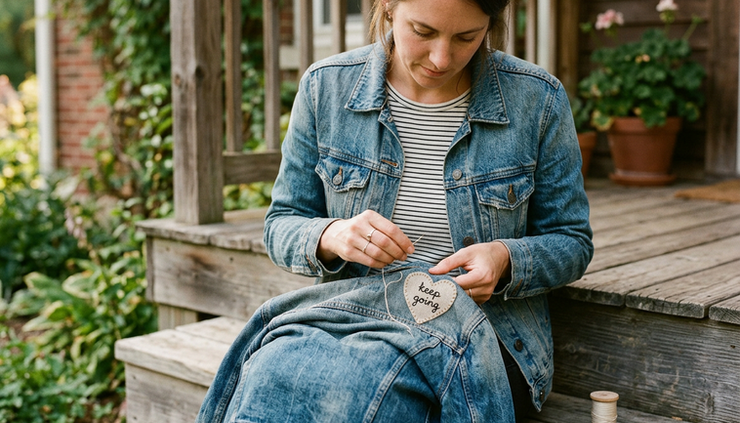
Repair guidance or patch kits
Seasonal donations to shelters, schools, clinics, and mutual aid groups
Clear pricing that explains what customers are paying for
Durability matters because replacing clothing adds cost and waste. A well-made sweatshirt that lasts years may be more accessible than a cheap one that falls apart after a few washes. At the same time, entry-level options help people take part without feeling priced out.
National access also means thinking beyond one region. A person in Arizona may need breathable sun protection. Someone in Minnesota may want warm layers. A student in a rural area may rely on online ordering. A person without stable housing may need easy-care clothing that dries quickly and holds up.
Inclusive design asks a basic question: Can people actually use this in their real lives?
Advocacy should not turn personal pain into a trend
The line between awareness and performance can be thin. Mental health clothing should support people, not turn distress into decoration. Designs that glamorize breakdowns, romanticize self-harm, or make diagnosis look like a personality costume can hurt people who are living through serious challenges.
Responsible clothing avoids:
Graphic imagery that could trigger harm or distress
Jokes that target a specific diagnosis
Phrases that make suffering seem fashionable
Claims that a product can cure anxiety, depression, or trauma
Designs that pressure people to disclose personal experiences
Limited “awareness” drops with no real support behind them
A better model centers dignity. A sweatshirt can say, “Stay another day” or “You matter here” without using shock value. A T-shirt can promote crisis resources, peer support, or community care in a calm way. A hat can carry a small reminder that only the wearer notices.
The point is not to make mental health clothing bland. Creativity matters. Joy matters. Humor can help when it punches up, builds connection, or offers relief. The key is care. The person wearing the clothing should feel held, not used.
Community input makes better clothing
The strongest designs often come from the people who will wear them. That includes people with lived experience, caregivers, peer support workers, therapists, educators, disabled people, faith leaders, youth organizers, elders, and community artists.
Community input can shape every part of clothing, from fabric to fit to language. It can reveal needs that a designer might miss.
For example, a youth group may want oversized hoodies with low-key designs because bold messages feel too exposing at school. A veterans’ peer group may prefer sturdy jackets with simple text about staying connected. A group of new parents may want soft, washable shirts with messages about rest and support. A disability community may point out that a beautiful sweatshirt still fails if the neck opening is too tight or the zipper pull is too small.
Listening should happen before launch, not only after complaints. Fit testing, surveys, small pilot runs, and open feedback sessions can prevent exclusion from becoming built into the product.
Representation is strongest when it changes the final design.
How to choose mental health clothing with care
Whether buying one shirt, planning a community fundraiser, or building a full collection, a few questions can help keep the choice grounded.
Ask about the message.
Does it comfort without minimizing pain? Does it avoid shame? Would it still feel respectful if worn near someone having a hard day?
Ask about the fit.
Does the size range include more than a narrow middle? Are measurements clear? Are different bodies shown?
Ask about the feel.
Is the fabric soft enough for repeated wear? Are tags, seams, cuffs, and prints likely to irritate sensitive skin?
Ask about access.
Is there at least one affordable option? Can people in different climates and settings use it? Is it easy to wash and care for?
Ask about respect.
If the design references a culture, language, identity, or community, were people from that community included and paid? Is the meaning clear?
Ask about honesty.
Does the clothing make health claims it cannot support? Does it imply that buying something equals healing? Does it share resources when the message touches on crisis, grief, or trauma?
These questions do not remove all risk, but they slow the process in a good way. They move clothing from impulse to intention.
The future of inclusive mental health clothing
The next step for this kind of clothing is not just more slogans. It is better design, deeper listening, and wider access.
Imagine mental health apparel that includes adaptive hoodies as a standard option, not a rare specialty item. Imagine size charts that are clear enough for people to shop with confidence. Imagine shirts designed with multilingual communities, not simply translated after the fact. Imagine school clubs, recovery groups, faith communities, disability groups, and local artists shaping what support looks like in fabric.
That future is possible because the best ideas are already simple. Make clothing softer. Make sizing broader. Make language kinder. Make design more respectful. Make access real.
Inclusive mental health clothing will never replace care. It should not try to. Its role is smaller and still meaningful. It can offer comfort on a hard morning. It can help someone feel seen in a crowd. It can signal that a conversation is welcome. It can remind a community that mental health belongs to everyone, not only the people who can afford the right words or fit the usual mold.
The takeaway is clear: clothing becomes more powerful when it makes room. Room for grief and joy. Room for culture and identity. Room for disability and sensory needs. Room for quiet support and bold advocacy. Room for every community to say, in its own way, “We are still here, and we care for one another.”
Inclusive Mental Health Clothing for Every Community


Comments