

Silent Rebel LLC| Take Control of Your Growth
A trigger can make the present feel smaller than it really is. One comment, tone of voice, facial expression, smell, place, or memory can pull the past forward and convince the mind that an old threat is happening again.
That does not mean something is wrong with you. It means your mind learned to protect you. The problem starts when protection becomes a prison.
Growth begins when you stop treating every trigger as a command. A trigger may explain your reaction, but it does not have to decide your next move. You can learn what sets you off, pause before reacting, and practice a new response until it becomes more natural.
This article is for reflection and personal growth. If triggers are tied to trauma, panic, self-harm, or unsafe situations, working with a licensed mental health professional can make the process safer and more effective.

Silent Rebel LLC| Take Control of Your Growth| Understand what a trigger is really doing
A trigger is not just “being sensitive.” It is a signal. Your brain connects something in the present with something painful, unsafe, or unresolved from the past. Then your body reacts before your reasoning mind has time to catch up.
That reaction may look like:
Shutting down
Getting defensive
Overexplaining
Feeling sudden anger
Wanting to leave immediately
Trying to please everyone
Replaying the moment for hours
Assuming rejection, judgment, or danger
The trigger might seem small from the outside. Inside, it can feel huge because it touches an old wound.
For example, someone who grew up being criticized may feel intense shame when a partner says, “Can we talk about something?” Someone who was ignored may panic when a text goes unanswered. Someone who had to stay alert in childhood may read neutral silence as disappointment or anger.
The goal is not to shame the reaction. The goal is to notice the pattern without obeying it right away.
A trigger says, “Pay attention.” It does not get to say, “Lose control.”
Learn your personal trigger map
You cannot change what you refuse to study. That does not mean obsessing over every uncomfortable moment. It means becoming mentally cautious, aware, and honest about the situations that tend to pull you back into old patterns.
Start by tracking three things after a strong reaction:
What happened right before the reaction?
What did I feel in my body?
What story did my mind tell me?
The story matters because triggers often come with fast assumptions.
A friend cancels plans, and the story becomes, “I do not matter.”
Someone gives feedback, and the story becomes, “I am failing.”
A loved one sounds tired, and the story becomes, “They are upset with me.”
A room gets quiet, and the story becomes, “Something bad is coming.”
Write these down when you can. Over time, you may see themes. These themes are not your identity. They are clues.
Common trigger themes include:
Fear of abandonment
Fear of being controlled
Fear of failure
Fear of being embarrassed
Fear of conflict
Fear of not being enough
Fear of being misunderstood
Once you know the theme, the trigger becomes less mysterious. You can say, “This is my fear of rejection showing up,” instead of “Everything is falling apart.”
That one sentence can create space.

Pause before you choose your response
The first few seconds after a trigger are powerful. They can decide whether you repeat the past or practice something new.
A pause is not weakness. It is self-leadership.
When you feel activated, try this simple sequence:
Name what is happening.
Say to yourself, “I am triggered,” or “My body thinks I am in danger.”
Slow your body down.
Take a few steady breaths. Feel your feet on the floor. Relax your jaw. Drop your shoulders.
Separate fact from fear.
Ask, “What do I know for sure right now?” Then ask, “What am I assuming?”
Choose one next right action.
That might be asking a question, taking a break, saying less, walking outside, or waiting before replying.
This is where control begins. Not control over other people. Not control over every outcome. Control over your participation in the moment.
If someone says something that stings, the old pattern may push you to attack, withdraw, or beg for reassurance. The new pattern might sound like:
“I need a minute before I answer.”
“Can you say that another way?”
“I am feeling defensive, but I want to understand.”
“I’m not ready to talk about this yet. I can come back to it later.”
These responses do not erase discomfort. They keep discomfort from taking the wheel.
Challenge the old story with present evidence
Triggers are often powered by old conclusions. At some point, your mind may have learned, “I am not safe,” “I cannot trust people,” “I have to be perfect,” or “If someone is upset, it is my fault.”
Those beliefs may have made sense in the environment where they formed. But growth asks a new question.
Is this belief still true here, with these people, in this moment?
This is not positive thinking. It is honest thinking.
Try using a two-column check when a trigger hits.
Old story
“They are ignoring me because I do not matter.”
“If I make a mistake, I will be rejected.”
“Conflict means the relationship is unsafe.”
Present evidence
They may be busy. They have shown care before. I do not have enough information yet.
Healthy people can talk through mistakes. One error does not define all of me.
Some conflict can be respectful. I can speak slowly and leave if things become harmful.
You are not trying to force yourself into a happy version of events. You are giving your mind more than one option.
The past usually speaks loudly. The present often speaks quietly. You have to practice listening for it.
Work on the trigger until it changes shape
Avoiding every trigger may bring short-term relief, but it can also make your world smaller. The point is not to throw yourself into painful situations with no support. The point is to work with the trigger carefully until it stops controlling your behavior.
Start small.
If feedback triggers shame, practice receiving low-stakes feedback from someone safe.
If silence triggers anxiety, practice waiting before sending a second text.
If conflict triggers panic, practice saying one honest sentence instead of disappearing.
If rejection triggers anger, practice feeling disappointment without turning it into proof that you are unworthy.
Change comes through repetition. The brain learns from experience, not just insight.
A helpful question is, “What would the healed version of me practice here?”
Not perform. Not pretend. Practice.
Maybe the answer is patience. Maybe it is honesty. Maybe it is walking away sooner. Maybe it is letting someone care about you without testing them. Maybe it is allowing discomfort without creating a whole identity around it.
The goal is not to never be triggered. The goal is to recover faster, react less harshly, and make choices that match the person you are becoming.

Stop giving the past full authority
Your past may explain your defenses, but it does not have to remain in charge of your life.
That can be hard to accept. Sometimes old pain feels like proof. If you were betrayed, ignored, criticized, abandoned, or controlled, your reactions may feel justified. They may be understandable. They may have helped you survive.
But survival patterns are not always growth patterns.
A person who learned to stay quiet may need to practice speaking.
A person who learned to fight may need to practice listening.
A person who learned to please may need to practice disappointing people without collapsing.
A person who learned to run may need to practice staying present with safe people.
This is the heart of growth. You stop asking, “Why am I like this?” with shame, and start asking, “What can I build from here?” with responsibility.
Responsibility does not mean blaming yourself for what happened. It means claiming your ability to respond now.
There is power in saying:
“This pattern started for a reason, but I do not have to keep repeating it.”
That sentence respects your history without handing it the future.
Build a plan for triggered moments
Growth becomes easier when you make decisions before the emotional storm arrives. A plan gives you something to return to when your mind feels loud.
Create a simple trigger plan with four parts.
My early signs
List the body signals that show you are becoming activated. Tight chest, hot face, racing thoughts, numbness, shaky hands, urge to interrupt, urge to disappear.
My grounding actions
Choose two or three actions that help you return to the present. Slow breathing, cold water on your hands, stepping outside, naming five things you see, stretching, praying, journaling, or taking a short walk.
My safe phrases
Prepare words you can use when emotions rise. Keep them short.
“I need a moment.”
“I want to respond well, so I am going to pause.”
“I heard you. I need time to think.”
“This is bringing up more than this conversation.”
My repair step
If you react in a way you regret, decide how you will repair it. Repair is part of growth. It may sound like, “I got defensive earlier. I’m sorry. I want to try that conversation again.”
A plan will not make you perfect. It will make you prepared.
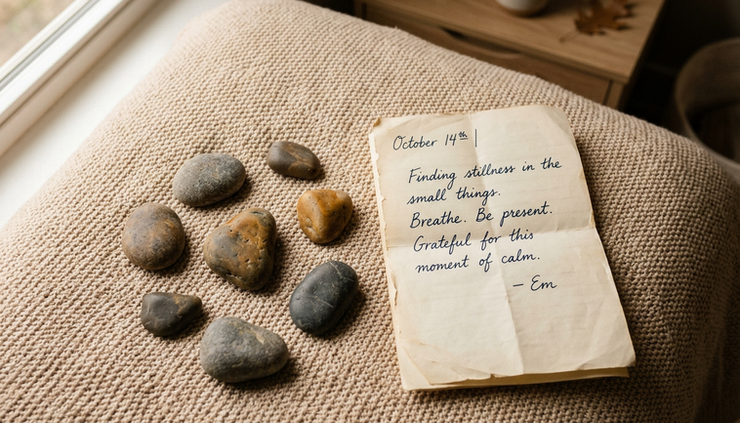
Choose growth one response at a time
Breaking free from triggers is not a single breakthrough. It is a series of moments where you notice the old pull and choose something different.
Some days, you will catch yourself early. Other days, you will see the pattern after the damage is done. That still counts if you learn from it. Awareness after the fact becomes awareness during the moment with practice.
Be patient, but do not be passive.
You are allowed to say, “This hurt me.”
You are allowed to need time.
You are allowed to set boundaries.
You are allowed to ask for reassurance.
You are also responsible for how you handle the feelings that rise in you.
That balance matters. Healing does not mean blaming yourself. Growth does not mean pretending nothing affects you. It means you stop letting an old wound write every new chapter.
The next time something triggers you, pause before you react. Ask what part of the past is speaking. Ask what the present actually requires. Then choose the response that supports the life you want, not the pattern you inherited.
That is how control returns. Not all at once, and not without effort, but through one honest, steady choice after another.
Silent Rebel LLC| Take Control of Your Growth



Comments